Does Crush have a focus problem?
Or is our real “problem” that we are trying too hard to force something inherently expansive into something easy to define and categorize?
Or are we good as we are?
I’ll answer the last one first. Hell yes, we are. We are rebels, after all.

Crush is not designed to give one type of woman one type of success, or to flatten ambition to suggest that there is only one correct way to build a career, a business, or a life that feels meaningful.
Our mission is clear, even if the ecosystem is complex.
We are here to close the gender gap, specifically in business, and we start by getting more women in senior leadership positions and helping women entrepreneurs to succeed on their own terms.
But anyone who has spent time inside this work knows quickly that this is not only an education gap, or a networking gap, or even only an access gap in the traditional sense.
The challenges are cultural, structural, and deeply rooted in how ambition is perceived, supported, and rewarded.
At the same time, the practical challenges are real, and we can’t reach into our collective financial power if we can't sell our skill sets, products, and services. We still need the education, networks, and visibility, but not as the end goal, but as an infrastructure.
Crush needs our events, media, and community, but having those is not the end goal; the impact that those drive is.
This is also where Crush sits in an uncomfortable Venn diagram: between cultural work and economic work, between visibility and infrastructure, between narrative and execution.
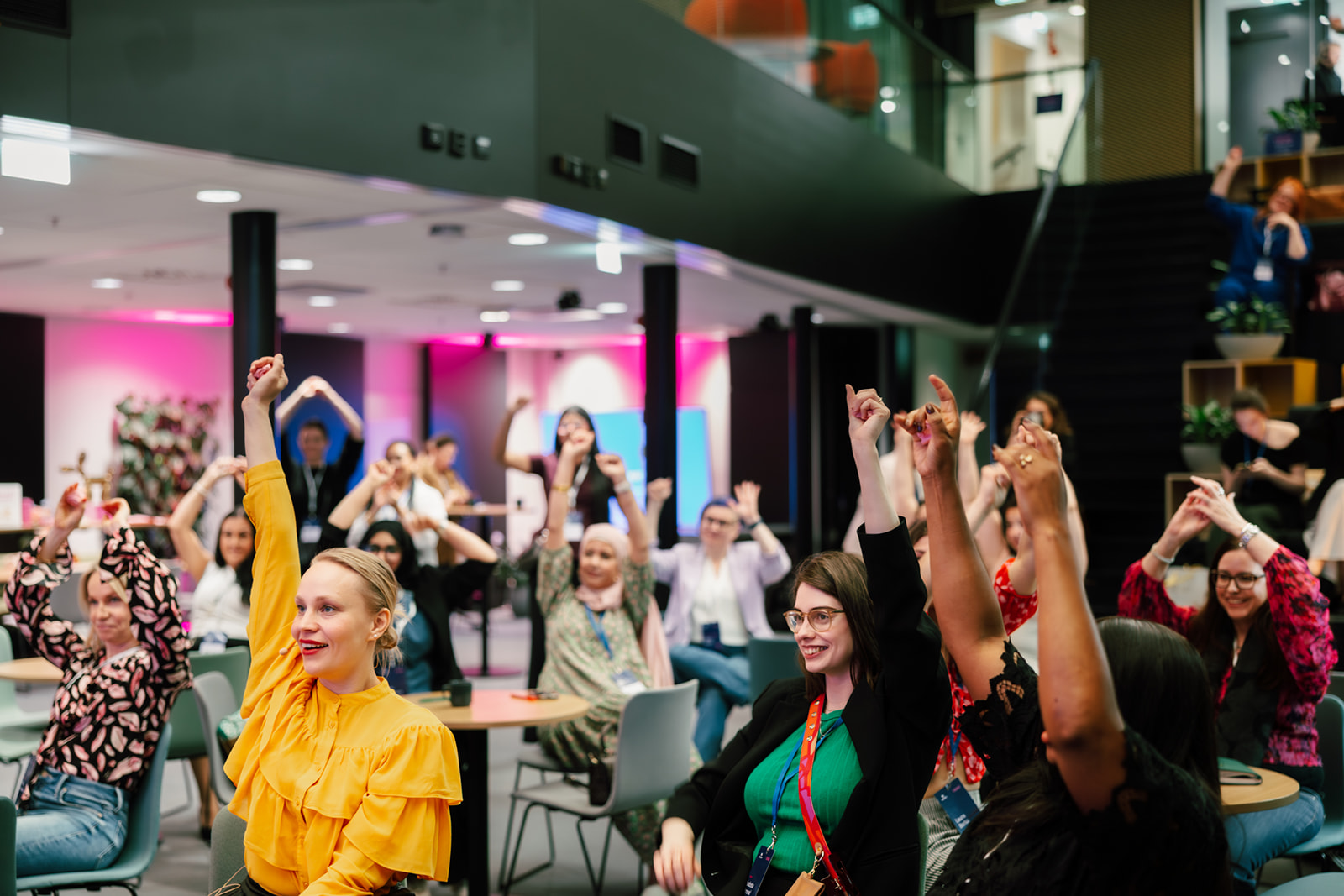
Since we started with Crush, we have wanted to bring together people from different backgrounds, career paths, and industries. Both entrepreneurs and professionals from larger companies, and women in senior leadership, to younger generations just looking for their first opportunities.
Over the past four and a half years, we have successfully created opportunities for women in all of these groups, but we have also built something less measurable and more complex, a shared space that still resists being easily defined.
That’s why Crush Movement somehow remains a mystery.
And sometimes the complexity is mistaken for a lack of focus.
Some even see the diversity as a flaw, which is the most ridiculous thing ever. That we should be a community FOR inclusion but WITHOUT inclusion? As if the “growth talk” was only reserved for a specific type of woman, not all women?
But inevitably, this lack of simplification leads to the same questions:
Is this for me? Who is Crush actually for?
When we do our annual event survey, and now when we did our Crush Future Lab, run by Inka Vuorinen of Momentum Design, we don’t get clear answers about who Crush is for, or what we should be.
As the founder of Crush, I used to take the mixed feedback personally. Like I was failing to make everyone happy. But I leaned into it. I know it’s not a flaw in the system. It is the system.
In our Future Lab, Inka Vuorinen summarized three different future paths for Crush.
I’m letting Inka do a better analysis of the results, but “belonging” got the most votes.

While “belonging” received the strongest pull in the responses, the truth is that many people did not choose one direction at all: they chose all three, which may in fact be the most accurate reflection of what Crush already is in practice.
The reality of Crush is that we still get contradictory messages:
“I want smaller events just with people I already know to form deeper connections,”
and
“I want larger events with a fresh name list to whom I can pitch later.”
And we have people in our community who would rather focus only on business growth. Others come because the same room also allows space for conversations that are rarely present in professional environments at all. Conversations about ambition, identity, burnout, self-care, leadership, female bodies, and everything in between.
If we want change, we need an ecosystem where business and personal growth need to coexist, simultaneously.
And there is no place for Crush if we strive to do things like everyone else.

The information and building community are already in your hands through a few clicks. You will reach more people with one LinkedIn post than you could speak with in an event in one day.
Access to knowledge and networks is no longer the problem. Then what is still missing, and what is Crush providing?
Trust.
Belonging.
Courage.
Opportunities.
Rooms where you are allowed to say your biggest dreams out loud without making yourself small first.
Spaces where you don’t need to cut parts of yourself off to be taken seriously.
Ideas that challenge you to grow instead of staying comfortable.
And perhaps most importantly, experiences that shift what people think and how they see themselves.
Many people consistently describe it in simple terms after the Crush event:
“Now I feel like I can do anything I want.”
That is what Crush has always been about.
A living ecosystem where ambitious women from different industries, generations, and backgrounds create relationships, opportunities, visibility, and cultural impact together. A shared system in which different forms of ambition can remain simultaneously valid.
And maybe that’s where the question of focus comes from.
Crush is difficult to define in one sentence because the problem we are trying to solve is not one-dimensional. It is layered, systemic, and deeply human. But the difficulty is not that Crush lacks focus.
We just refuse to think that focus must mean singularity and one solution.
Even in this context, diversity is not our weakness. It is the entire point of our system. Diversity is not just about different kinds of people; it is a catalyst for our cognitive expansion.
When you are exposed to perspectives that are not familiar, things start to shift, and you start seeing problems from angles you had not considered, and you begin to question assumptions you did not even realize you were carrying. And you start seeing the opportunities and the possibilities in a new light.
Growth starts to happen.
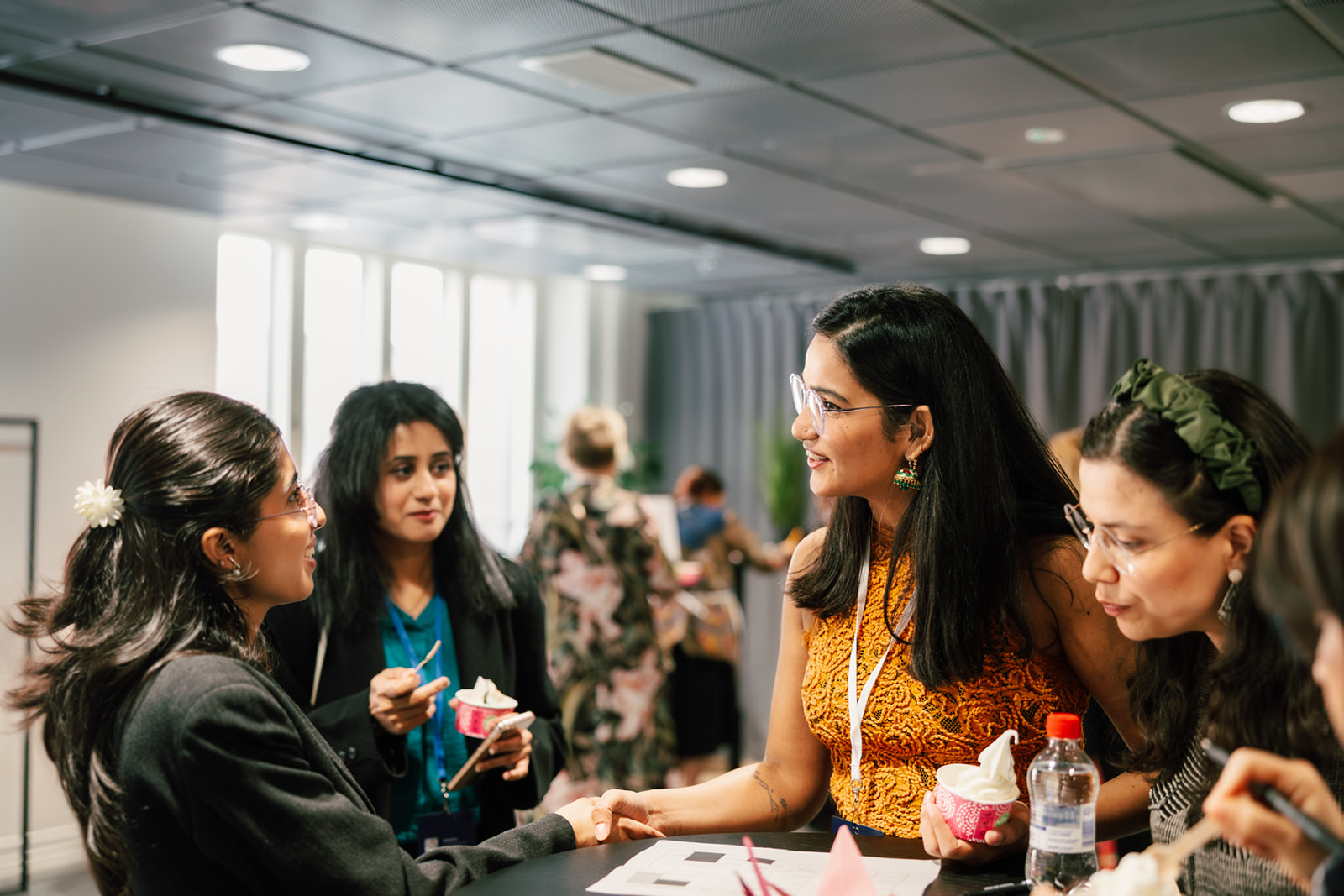
Crush is a place where forward-thinking women build their future together, and belonging is not a soft concept, but the foundation for economic power, visibility, and courage. Where your professional growth does not require pretending to be someone else. And where you don’t have to try to justify your ambition.
The real reason why people crave spaces like Crush is that it makes people want to act.
They start businesses.
They leave jobs that no longer fit them.
They hire their first employee or apply for their dream job.
They make decisions they had been postponing for years.
Not just because they received some information, or because they made some connections, but because their sense of possibility shifted. They will become seen, heard, funded, and remembered. They will make their impact undeniable - in business, culture, and society.
All in their own ways.
That is the real effect of Crush, but it’s hard to summarize or say in one tag line.
And it’s very easy to misunderstand.
Join us, but only if you are ready.
![[headshot] image of customer (for a landscaping service)](https://cdn.prod.website-files.com/6874a52f3965fab31cf07b31/68933f31920b3bb932df17bf_d5bdbbb-5608-4dc-ac-afd03aa5a4b_Untitled_design_-_2.webp)
Founder of Crush Movement. An award-winning marketing strategist and digital pioneer who built her career as a global nomad, helping Fortune 100 brands and entrepreneurs grow and break sales records. A bestselling author and keynote speaker, her work has been featured in Forbes, The New York Times, and MTV3.
A 30-day challenge designed for authentic thought leaders who want to become unignorable on LinkedIn.Build trust, master storytelling, and attract the right audience without relying on AI or clickbait hacks.Includes 28 emails with over 100 customizable post ideas, helping you show up confidently, optimize your profile, and grow your credibility, engagement, and sales.