
When I started the Skimbaco Lifestyle blog in 2007, my English grammar was questionable. It wasn’t terrible for someone whose native language wasn’t English, but it wasn’t great either.
But it didn't matter then, and it matters even less today (thanks to programs that check grammar for you).
Today? I've published over 2 million words online, written three books, and my blog turned into an online magazine. I have also been hired to build online media platforms, and to write ebooks, and content for brands of all sizes. I am also a keynote speaker, and I own a conference.
Writing regularly helped me to turn from a shitty blogger into a published author, into a voice.
Writing positioned me as an expert, it made people feel they know me, and it has brought me career, and life opportunities I don't think I would have had access to in any other way.
I know currently people are using AI to position themselves as "experts", and it's easier than ever to larp as an author. But will people really get to know you and your voice? I don't know.
This is my wish to read more - and longer format - content written by you.
Writing is, more than anything else, using your voice.
And like with anything, practice matters, and writing regularly helps you to define and master your voice.
Writing allows you to speak up, and it opens doors to speak.
I've spoken in events and conferences around the world, and I am often asked to speak again in the same conference the following year.
If I could give one piece of advice for anyone who wants to become a better speaker: start writing more.
It is not a coincidence that the most popular and the best speakers are also authors.
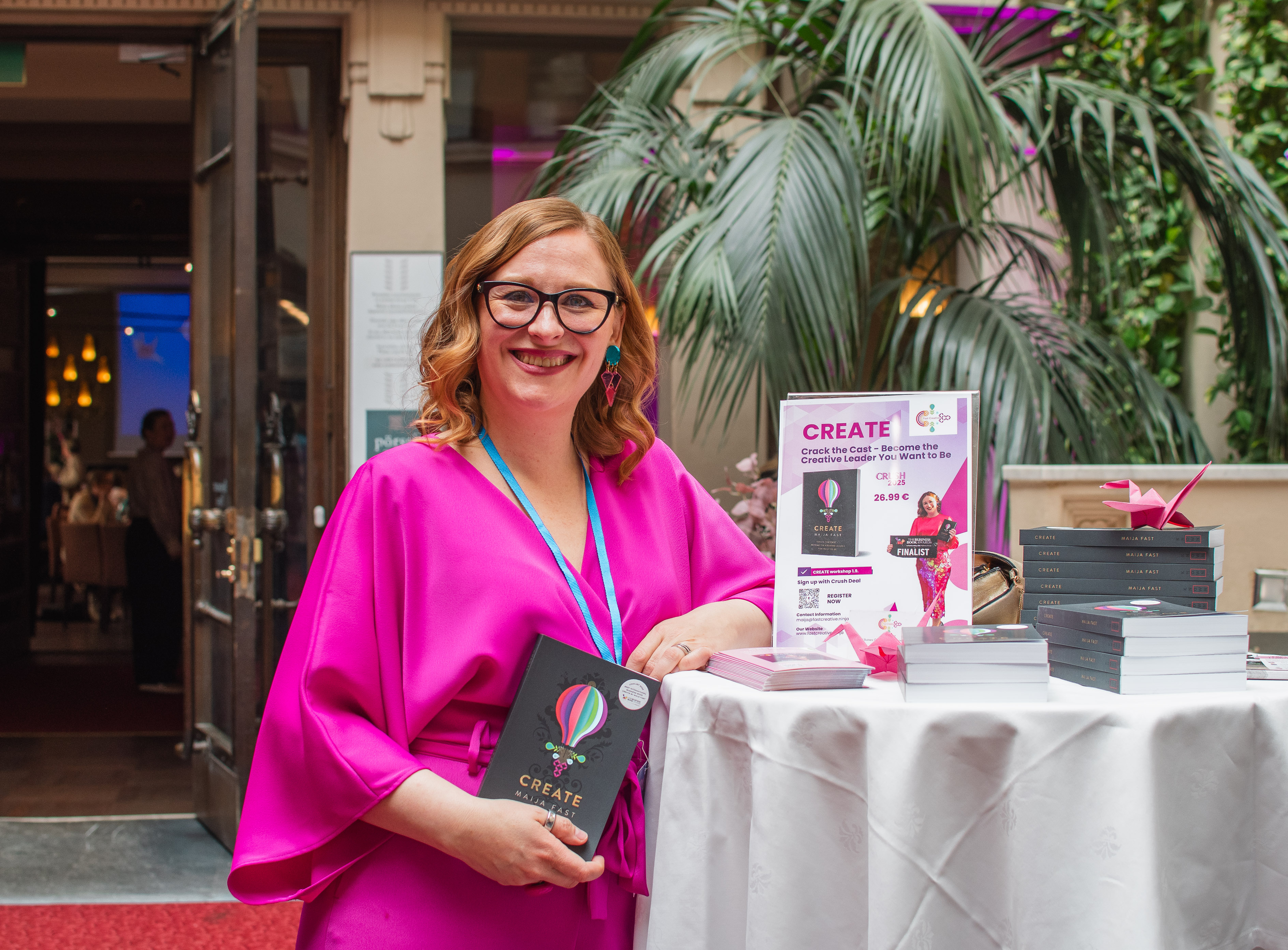
You go to events like Nordic Business Forum, and yes, even Crush, and many of the speakers have also published books. In their speeches? They talk about the same topics as in their books.
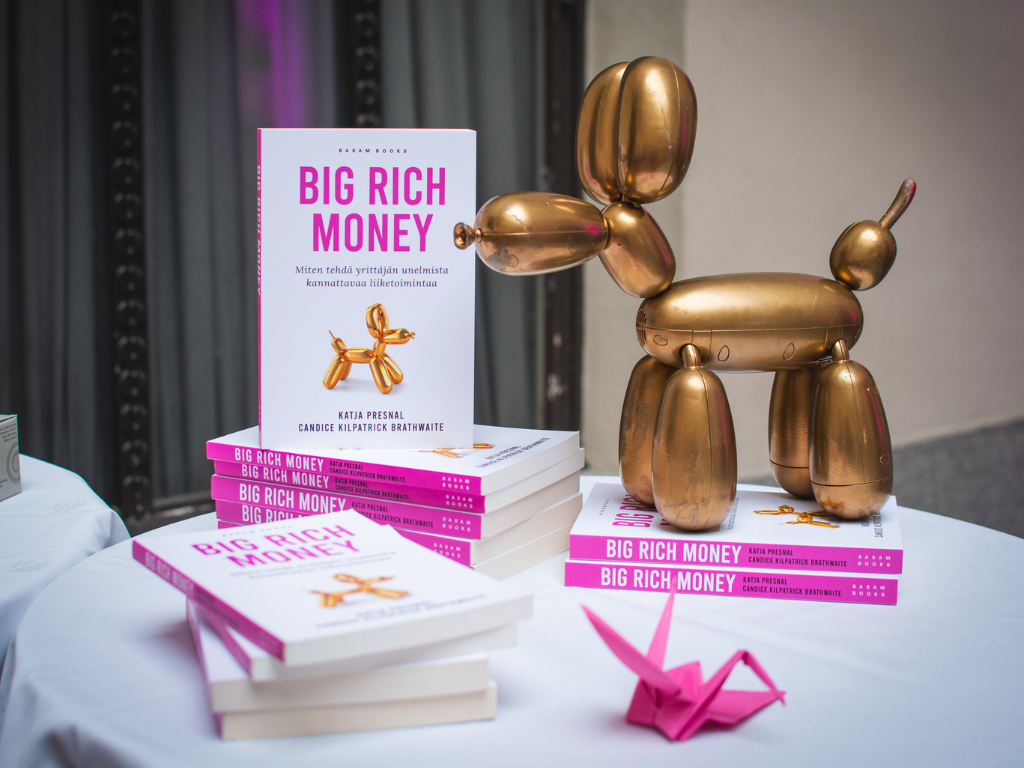
I really learned the benefits of writing for speaking after I had published the book Big Rich Money, which I co-wrote with Candice Kilpatrick Brathwaite. Suddenly, I was speaking in even more events, hosting webinars, being interviewed in podcasts, and sometimes I didn't have my normal time to prepare for each speech.
Guess what I did? I took a copy of Big Rich Money, or read what I had written from my original Google doc files on my phone right before stepping on the stage. In the moments when I felt nervous, my nerves were comforted by my own words. I just had to see them to remember them.
It was easier to "stay on brand", to sound more like a consistent expert, and remember larger amounts of information, without sounding overly rehearsed or reading from notes.
Above all, I had done the thinking work when writing. I had looked at the topic from different angles, thought about my personal experiences and compared theories to them. What was absolutely needed? What was too much or too trivial? All of that thinking work was done when writing, and it made is so much easier to speak about the same topics and sound cohesive, knowledgeable, and at the same time: me.
It can be easier to memorize speeches and practice performing for some, but being able to do this all on a short notice is a skill you need to practice, and writing is part of the practice.
My first book "Instagram as your Guide to the World - How, What and Who to Search and Follow on Instagram to Help You Travel the World" (2013) started as a blog post.
I first wrote one post, and realized it was going to be too long.
Then I decided to do a series of three blog posts. It turned into five blog posts. That's when I knew I could have a mini ebook of 30 pages in my hands.
Once I was finished writing the book, the book was 114 pages long.
Let me open my author math...
If you are used to writing short social media posts, first expand them longer until you are maximizing the word count (of the platform). You can also think that a good article is around three LinkedIn posts long. Expert deep-dives can be 2-3 regular blog posts long.
15-20 deep dive articles can turn into a book.
A few years ago I decided to estimate how many words I had written professionally, and I ended up with an estimate of 2 million words. If a typical book is around 100,000 words, I have written an equivalent of 20 books. Double if they are short books.
Damn. What if I had written 20 books? Would my impact on the world be bigger than just writing blog posts and social media posts? Or could I write 20 books in the next 15 years?
Of course, it’s easy to think: writing short social media posts has nothing to do with writing books or becoming a paid, respected, and experienced author-speaker.
Anyone can write on social media, but not everyone can write books.
Writing about multiple topics, using AI for ideas, writing, and editing, and not being consistent are what you could call not being an author-material. Maybe it feels impossible to make the leap from occasional pitch decks, LinkedIn posts, and rants to your BFFs into becoming an author. I get it.
Maybe you even feel you have nothing to say, and you have no voice at all.
Guess what works for that too? Starting to practice writing.

You might think that amplifying women’s voices is a new mantra for me, born just when launching the Crush online magazine. In reality, my original online magazine was a home for tens of writers, and I featured hundreds of women throughout the years.
But the need for me to encourage you to write, and for me to provide you the platform probably comes from much deeper, from my childhood.
My grandmother, a refugee of Karelia, was a writer. Not a professional one, but culturally important.
She sat by her typewriter, and wrote family stories one chapter at the time. She didn’t want the important stories of our family, and about the original home lost in the war to be forgotten.
Each time she finished a chapter, I would pedal my bicycle down the copy shop, and make copies of each chapter. Then I’d drive back to my grandmother’s house, and we'd carefully insert each copy in large envelopes, with a handwritten note from my grandmother, and then I'd take my bicycle again, and take the envelopes to the post office to be sent for my grandmother's friends, and distant family members.
This lasted for years.
My grandmother understood the importance of leaving your stories and your voice behind. She was not equipped with a computer, and her editing was brushing white paint from a nail polish-looking bottle. Many of her stories have now gotten lost. I don’t want more stories to get lost.
Oh, and did she speak at events? Yes.
My grandmother was a well-known speaker at the national and regional events of Karelian Society, the primary organization representing Karelian culture, history, and the interests of evacuees in Finland. The Karelian Society was established in 1940 after the Winter War to preserve Karelian traditions, organize regional activities (arts, sports, language), and foster community, particularly for those displaced from territories ceded to the Soviet Union.
My grandmother was an important voice of her time.
Your story matters. Your perspective on current events or your future predictions matter. You as part of society, and our community, matter.
And most likely, we have a lot to learn from you.
If you are looking for new ways to contribute to our community, grow your visibility, authority, and your business, this is it.
All Crush Movement members are invited to become contributors for Crush Movement media. If you are not a member yet, you can still apply, and become a contributor.
- Editorial content categories - what topics we post about
- Editorial styles - what styles of articles we publish
- Editorial guidelines - tone of voice and what to add to your post
All articles need to follow editorial guidelines and match Crush values, and we reserve the right to reject content. After all it's not just about publishing more. It's about writing content worth reading.
If you are interested in becoming and author, additional perks for members: you will get the exclusive How to Turn Your Expertise Into A Book And Land Your First Publishing Deal ebook, you can find it at the content vault part of your membership.
You can also get the 30-day LinkedIn Challenge as part of the membership, and kick-start your LinkedIn visibility and consistent writing.
![[headshot] image of customer (for a landscaping service)](https://cdn.prod.website-files.com/6874a52f3965fab31cf07b31/68933f31920b3bb932df17bf_d5bdbbb-5608-4dc-ac-afd03aa5a4b_Untitled_design_-_2.webp)
Founder of Crush Movement. An award-winning marketing strategist and digital pioneer who built her career as a global nomad, helping Fortune 100 brands and entrepreneurs grow and break sales records. A bestselling author and keynote speaker, her work has been featured in Forbes, The New York Times, and MTV3.
A 30-day challenge designed for authentic thought leaders who want to become unignorable on LinkedIn.Build trust, master storytelling, and attract the right audience without relying on AI or clickbait hacks.Includes 28 emails with over 100 customizable post ideas, helping you show up confidently, optimize your profile, and grow your credibility, engagement, and sales.