This article is part of a five-part blog series published in the Crush Movement online magazine. The series explores Project Heartware, a human-centred approach to artificial intelligence in the age of rapid technological change.
Project Heartware is designed for non-profit associations and organizations that work with people who are at risk of being left behind as society becomes increasingly shaped by emerging technologies. These risks may be related to age, language barriers, disability, unemployment, rehabilitation, challenging life situations, or simply limited access to continuous learning opportunities. Often, it is not one single factor, but a combination of many.
The organizations involved already do critical work. They support people who, for various reasons, are not well served by mainstream systems. Project Heartware exists to support these organizations in strengthening the agency of their members and communities in a society that is rapidly becoming more digital, more automated, and more AI-driven.
We are entering a phase where artificial intelligence is no longer just an interesting tool or an experimental technology. During the coming years, and very likely already during 2026, AI agents will become a visible and active part of everyday life. Recruitment processes, studying, learning, public services, and work itself are already shifting toward agent-based systems.
In recruitment, initial screening and interviews are increasingly handled by automated systems and agents. CVs and applications are filtered, grouped, and evaluated before a human ever sees them. In education, learning is already heavily supported by AI, often in an unstructured and unsupervised way. In working life, AI agents are beginning to support planning, analysis, communication, and decision-making.
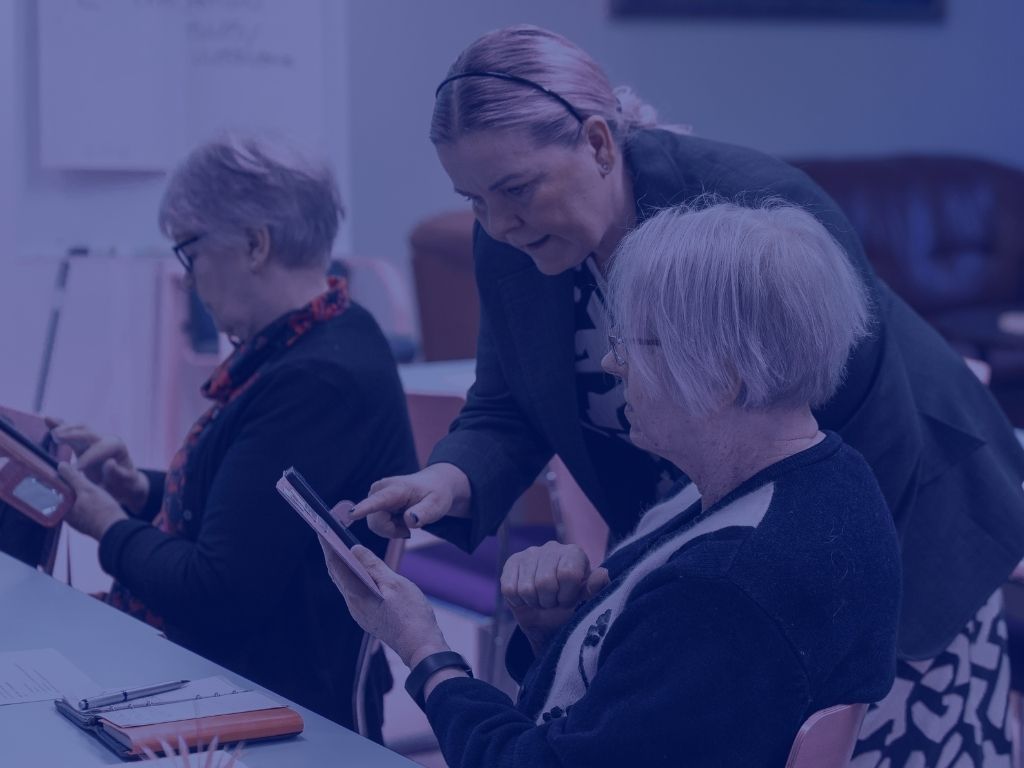
For older people, the impact is equally concrete. Accessing healthcare, booking appointments, managing finances, interacting with public authorities, or even participating in social life increasingly requires digital and AI-related skills. If people do not understand how these systems work, the risk of exclusion grows rapidly.
This is not a distant future scenario. It is already happening.
In my experience, exclusion rarely begins with technology itself. It begins with a lack of understanding. People encounter artificial intelligence mainly through headlines, news, and social media. Media logic favours strong reactions, fear, and shock value. Negative narratives generate clicks, comments, and attention. As a result, many people are exposed primarily to alarming stories about AI.
Without education or safe opportunities to explore technology themselves, this creates fear and resistance. AI becomes something threatening, something to avoid. People may feel that it is not meant for them, that they are already too late, or that engaging with it is dangerous.
When learning opportunities are missing, people do not dare to experiment. They do not dare to ask questions. They do not dare to admit uncertainty. Over time, this turns into withdrawal. People stop engaging, not because they are incapable, but because they never had a safe space to understand what is happening.
This is where exclusion starts.
Project Heartware is built on the idea that agency grows through understanding and relevance. When people begin to understand what emerging technologies do, and how they relate to their own everyday lives, fear begins to dissolve.
I do not have academic research yet to prove this, but I have long experience from ICT projects, technology adoption, and organizational change. What I consistently observe is that those who get involved early often become carriers of change within their own communities. They become messengers, mentors, and informal leaders.
When people see concrete benefits, they gain confidence. When they gain confidence, they dare to experiment. When they experiment together, learning accelerates. This creates a compounding effect. One person’s curiosity spark another’s interest. One successful experience lowers the threshold for the next person.
Importantly, the environments we use for learning are safe. The exercises do not involve sensitive information or high-risk use cases. They are every day, practical scenarios that anyone can try. Safety and psychological comfort are key.
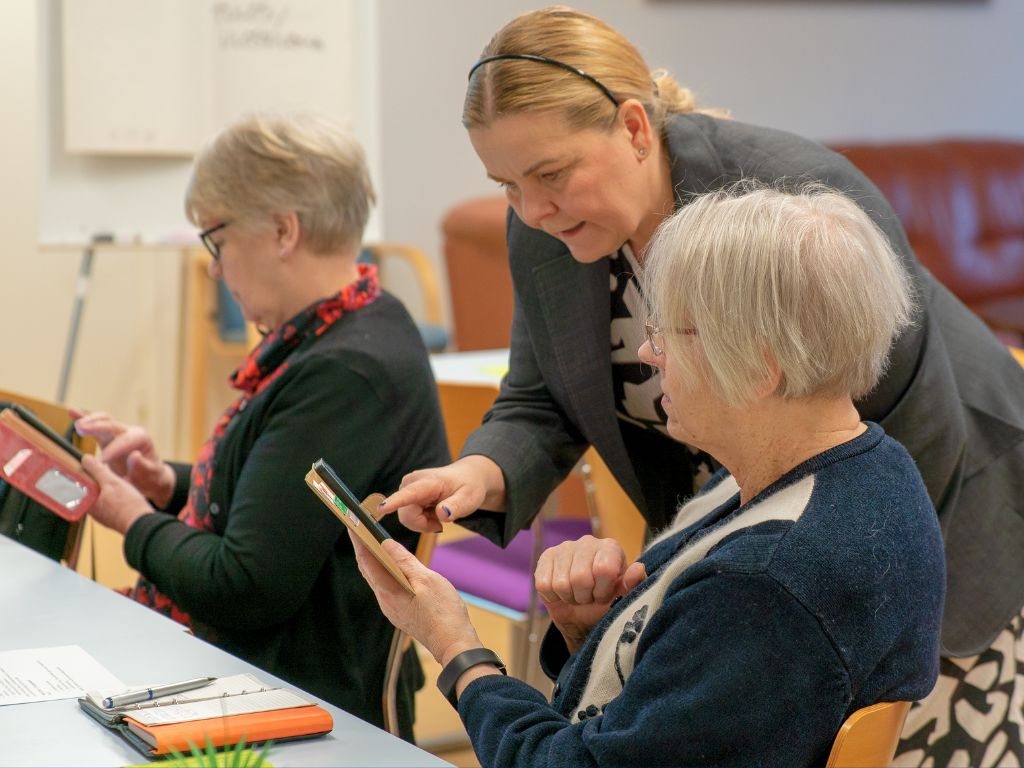
Associations and non-profit organizations play a unique role in Finnish society. They are deeply embedded in communities, built on trust, and governed by clear structures and legislation. People feel safe in these environments.
At the same time, many associations are under increasing financial pressure. Public funding has been cut, and the organizations working with the most vulnerable groups are often hit first. They simply do not have the resources to purchase extensive training on emerging technologies.
This is why Project Heartware is offered pro bono. It is a conscious value-based choice. Companies, public sector organizations, and educational institutions can purchase these services if they wish. Associations working with limited funding often cannot.
Each potential collaboration is carefully reviewed. Not every organization is automatically accepted. The goal is meaningful, credible cooperation where Project Heartware can genuinely support the organization’s mission.
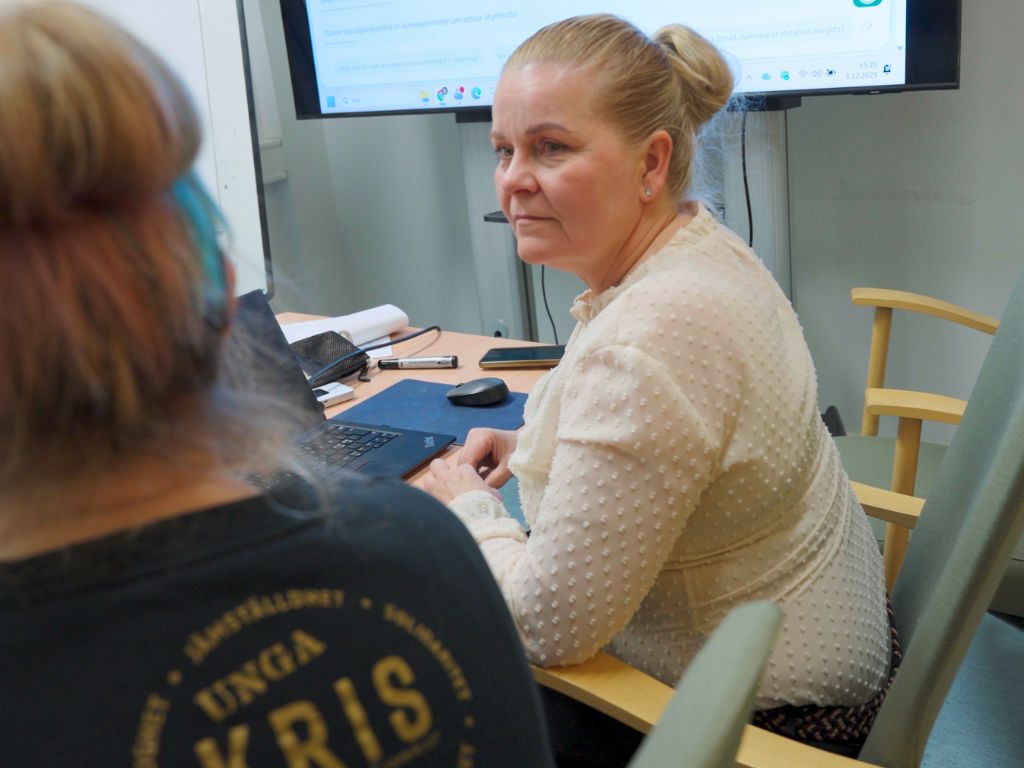
The facilitator’s role is central. A learning environment must feel safe. People must be able to say, “I don’t understand,” “I’m afraid,” or “I don’t want to use this” without judgment.
Many participants carry concerns shaped by public discourse. Others may struggle with concentration, learning difficulties, or past negative experiences. Creating a space where all of this can be expressed openly is essential.
My approach is intentionally human and approachable. I do not aim to be an authority figure. I aim to be present, honest, and open. This lowers the threshold for participation and allows real learning to begin. I am not a trained educator in the traditional sense. What I offer is practical, lived experience and a willingness to share what I have learned through years of professional work.
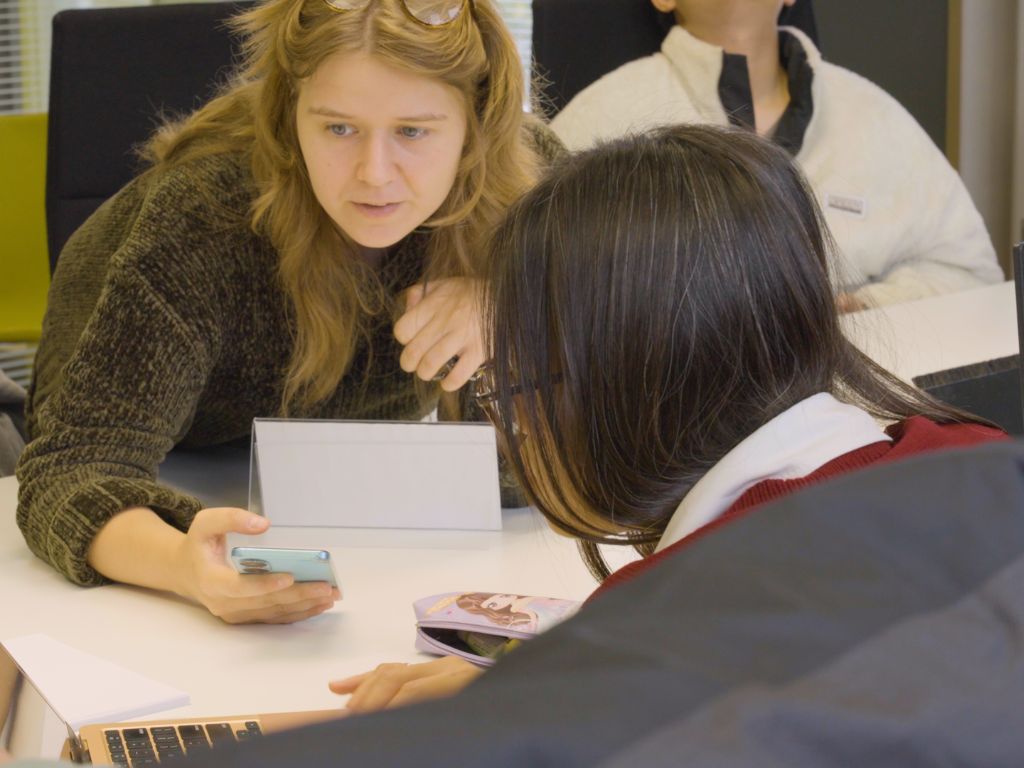
The concrete benefits of Project Heartware vary depending on the target group. For senior organizations’ active members, benefits often appear in everyday routines. Communication, newsletters, planning, documentation, and coordination become easier and faster. This frees time for what truly matters, people and community.
For rehabilitation and reintegration groups, the benefits are often emotional and motivational. Moments of success, laughter, and shared discovery matter deeply. For people whose lives have included many setbacks, experiencing competence and joy can be transformative.
In addition, organizations strengthen their public profile. Participating signals awareness, relevance, and proactive engagement with societal change.
Participant feedback is collected after each workshop. Satisfaction and recommendation willingness are tracked carefully. These metrics help guide further development.
In addition, Project Heartware’s impact is being studied from an academic perspective in collaboration with researchers from LUT University. The project itself is not developed by the university; instead, its effects are being observed and analysed. The first research-based results are expected toward the latter part of 2026. Over time, this collaboration will produce evidence-based insight into how human-centred AI initiatives influence learning, confidence, and individual agency.
I am an entrepreneur for the second time in my life. In my first venture, I worked in a fast-growing company in the construction sector. The business was financially successful. Revenue grew rapidly. Everything revolved around cash flow, budgets, and quarterly results.
I did well financially, but I was deeply unhappy. My work felt empty. Whether the company made a profit or a loss did not change the world in any meaningful way. We did not save lives. We did not strengthen communities. We produced reinforcement steel, and that was it.
That experience changed me.
Today, I want my work to be guided by values. I want it to matter. I am approaching my mid-fifties, and I want to leave something meaningful behind. Project Heartware is my attempt to do that. To contribute, in a concrete way, to a more inclusive technological future.
If your organization works with people who face barriers to participation, I invite you to apply. Project Heartware workshops are organized once a month, and places are limited. There is nothing to lose. The workshops are pro bono, and the only real requirement is openness to learning together.
I cannot create this change alone. I need organizations and communities. Together, we can ensure that emerging technologies strengthen inclusion rather than deepen existing divides.

Crush Movement is an online magazine and community that brings together founders, experts, and organizations who want to build meaningful, future-oriented work together. The platform evolves continuously through the contributions and ideas of its members.
Nexpert is a Finnish consulting company working at the intersection of technology, learning, and human-centred change. Nexpert focuses on practical collaboration, adoption, and building solutions together with people.
Tanja Karonen is the founder of Nexpert. Her work is guided by values, collaboration, and the belief that sustainable progress happens when people are actively involved in shaping what they are part of.
This article was created using artificial intelligence and an AI-assisted interview and writing process.
![[headshot] image of customer (for a landscaping service)](https://cdn.prod.website-files.com/6874a52f3965fab31cf07b31/69b40e7a8c39a77ecfd4b7f6_Tanja%20Karonen.PNG)
Tanja Karonen is a solopreneur and expert in digital transformation, continuous improvement, and human-centric technology. Her work focuses on simplifying everyday work by using AI, optimizing processes, and removing unnecessary complexity. She helps organizations identify what truly adds value and eliminate waste, making work clearer, smoother, and more meaningful.
A 30-day challenge designed for authentic thought leaders who want to become unignorable on LinkedIn.Build trust, master storytelling, and attract the right audience without relying on AI or clickbait hacks.Includes 28 emails with over 100 customizable post ideas, helping you show up confidently, optimize your profile, and grow your credibility, engagement, and sales.