This article is part of a five-part blog series published in the Crush Movement online magazine. The series explores Project Heartware, a human-centred approach to artificial intelligence in the age of exponential technological change.
After the Eläkeliitto (Pension Association) case, which focused on active retirees, this article shifts the perspective to a very different group: people rebuilding their lives after challenging circumstances.
Project Heartware was created to respond to the risk of digital exclusion. In the Kris Tampere case, that risk becomes concrete. This is a context where confidence, agency, and trust are already fragile, and where technology can either become another barrier or a meaningful source of support.
Kris Tampere works with people who have a background in substance abuse or criminality and who are being supported back into working life and everyday stability. From the perspective of Project Heartware, this group represents one of the core reasons the initiative exists.
Supporting people in vulnerable positions is not an abstract value for me. It is the foundation of Project Heartware. When I was considering the next organization to collaborate with after Eläkeliitto, Kris Tampere stood out immediately. The need for a calm, human-centred approach to technology was evident.
My contact person at Kris Tampere, Minna, embodies much of what this work is about. Her own path back into working life, and her way of supporting others through similar transitions, made it clear that this collaboration would be built on trust, realism, and respect. This was not about introducing the latest tools. It was about meeting people where they are.
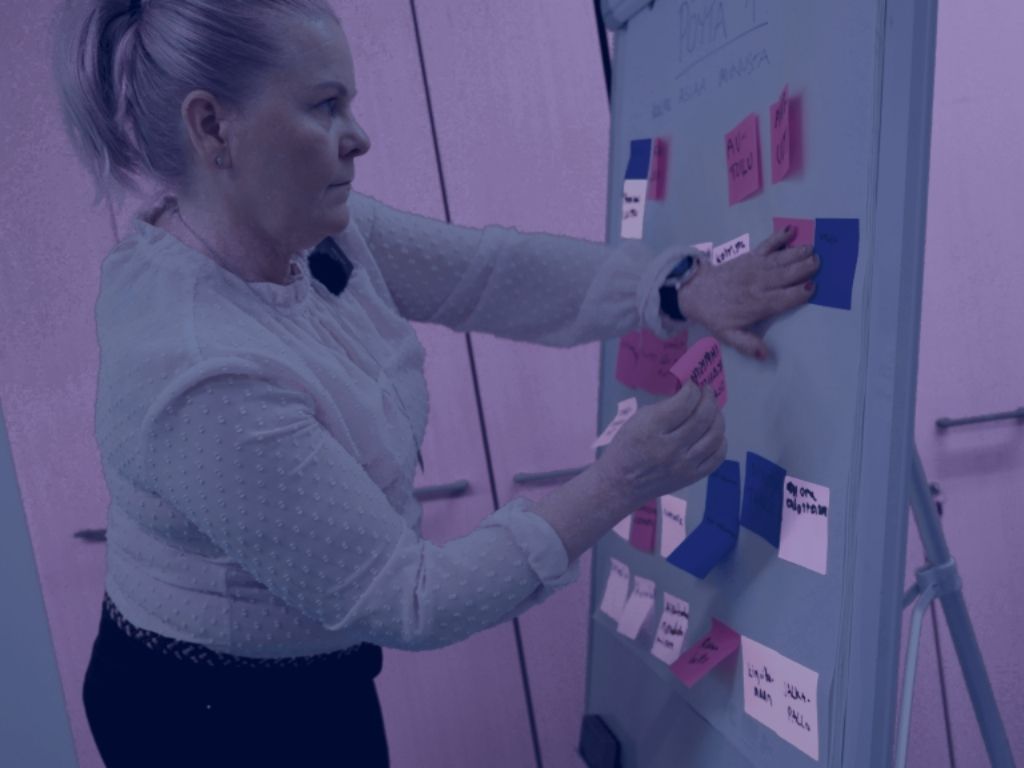
As with the Eläkeliitto case, the first workshop at Kris Tampere did not involve devices or technology. It was a facilitated session focused entirely on understanding participants’ starting points.
Through discussion and careful observation, we explored participants’ experiences with technology, their confidence levels, and their everyday challenges. The goal was not to assess skills or measure competence. It was to create a safe environment where people could speak openly about uncertainty, hesitation, and previous negative experiences.
Very quickly, certain themes emerged. Precision mattered. Fear of making mistakes was present. For some, even touching unfamiliar technology triggered anxiety. For others, curiosity was already there, but confidence was fragile.
These insights were critical. They shaped not only the content of the next workshop, but also its rhythm, structure, and emotional tone.
In this context, learning could not begin with tools. It had to begin with safety.
Small design choices mattered. We started with a short breathing exercise to help participants settle and focus. The pace was deliberately slow. No one was rushed, and no one was required to participate beyond what felt comfortable.
This approach may seem subtle, but in a group where many participants carry experiences of failure or exclusion, it made a tangible difference. People relaxed. Questions began to emerge. Trust started to form.
Only after that could learning take place.
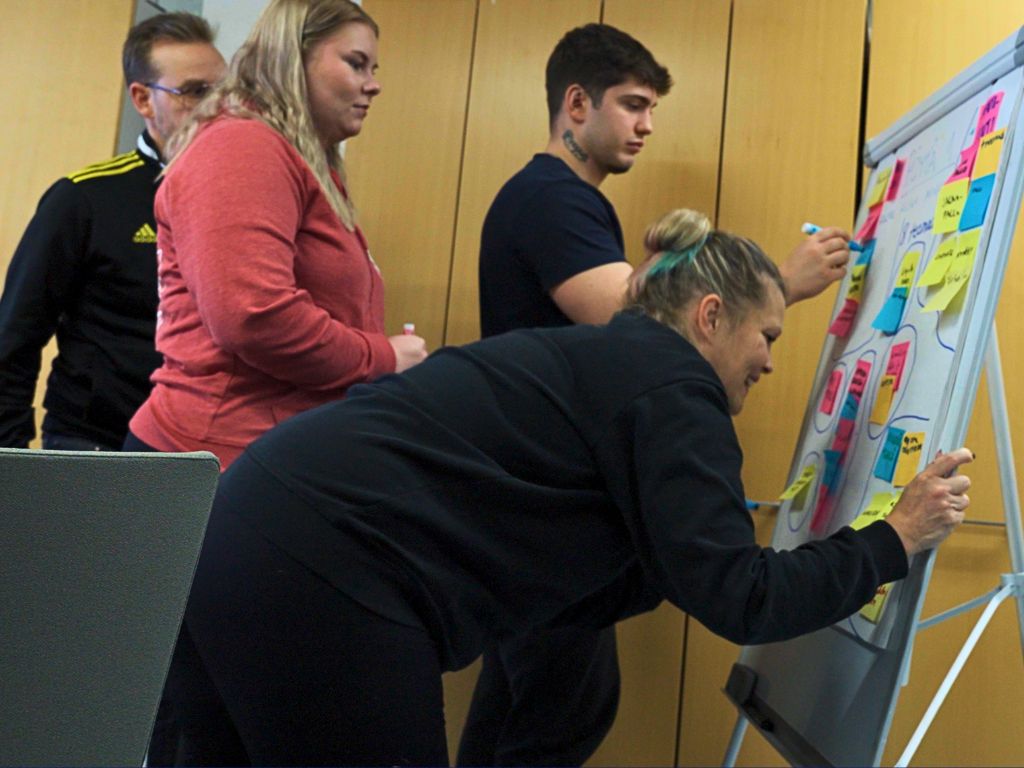
The second workshop has now been held, and this time we moved into hands-on practice. At the beginning of the week, participants were sent links to selected YouTube videos so that they could, if they wished, explore a few of the topics in advance. Participation in this pre-learning was entirely optional.
Participants were also asked to take a photo of the contents of their refrigerator before the workshop. This simple request already sparked curiosity and conversation.
The workshop itself focused on very concrete, everyday applications. Participants created a basic CV template, took selfies with their mobile phones, and experimented with turning those selfies into CV photos. We also practiced generating and modifying images more broadly.
What happened next was unexpected and deeply human. As people saw how small adjustments could transform an image, laughter broke out. There were spontaneous bursts of amusement, shared jokes, and moments of genuine surprise. The room filled with energy.
These moments mattered more than any technical outcome. Laughter replaced tension. Curiosity replaced fear. Learning became something shared rather than something to endure.
To support focus and prevent cognitive overload, learning was carefully structured into 30-minute segments. Each segment began with a short breathing exercise, helping participants reset and refocus. Stretching and movement breaks were built into the session to support both physical and mental well-being.
This rhythm allowed participants to stay present. Nobody was left behind, and nobody felt pressured to keep up. People could step in and out of learning moments as needed.
Researchers from LUT University were present during the workshop. They introduced themselves to the group and conducted surveys both before the workshop and immediately afterward. Later in the process, they will also interview Minna and a small number of participants to deepen the understanding of the workshop’s impact from an academic perspective.
One of the most meaningful outcomes of the second workshop was the shared decision to continue working together. Rather than ending the collaboration after a single hands-on session, we agreed to build the next phase around something already familiar and meaningful to the group: the cooking club.
In the upcoming workshops, we will explore how AI can support the cooking group in practical ways. This includes creating ingredient inventories, making better use of existing food, spices, and dry goods, and planning meals in a way that helps reduce weekly food expenses without sacrificing quality or enjoyment.
This approach connects learning directly to everyday life. AI becomes a practical helper, not an abstract concept. A couple of additional workshops are already planned around this theme.
A key principle throughout this case is that technology should not create dependence. The goal is not to outsource thinking or decision-making to AI. Instead, the aim is to strengthen participants’ sense of agency.
For people rebuilding their lives, this distinction is crucial. Confidence grows when individuals feel capable of making choices, understanding tools, and deciding how and when to use them. Technology should support autonomy, not replace it.
In the Kris Tampere workshops, this principle guided every decision, from pacing to content selection.
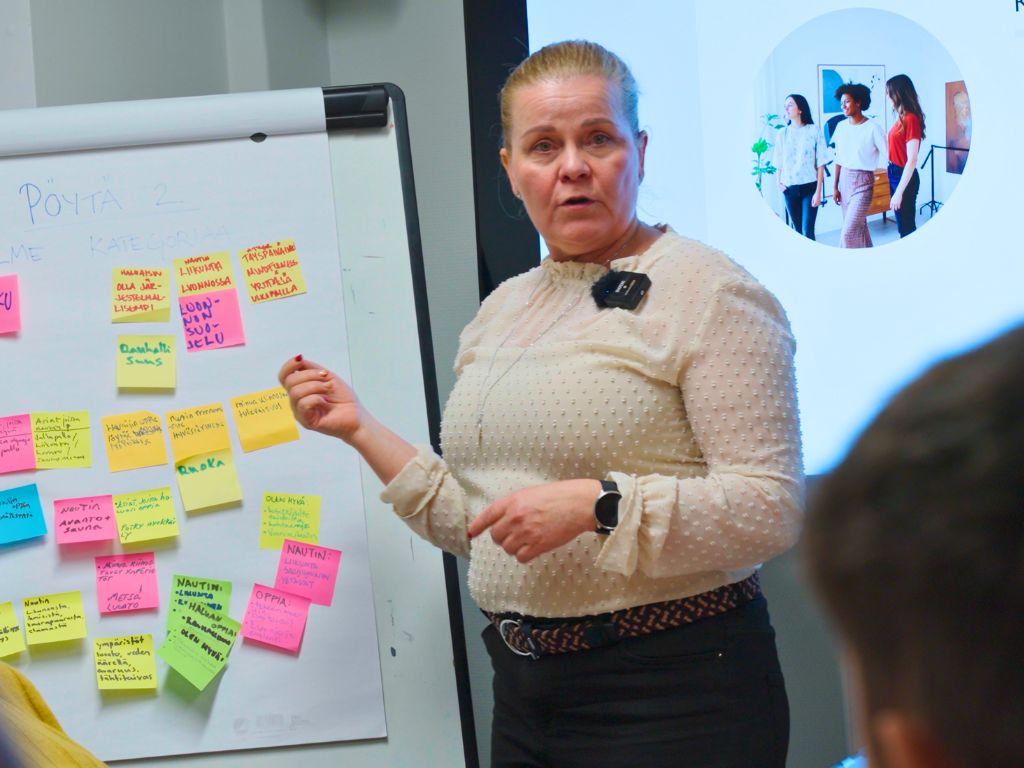
Both participants and organizers expressed strong satisfaction with the workshops. The contact person, the workshop facilitator, and the participants themselves all felt that the goals had been met.
Most importantly, participants experienced genuine moments of success. They learned something new, laughed together, and left the workshop feeling capable rather than overwhelmed. Motivation to continue learning was clearly present, and everyone involved expressed a willingness to keep exploring and developing their skills further.
From the perspective of Project Heartware, this is the clearest indicator of success. The aim is not mastery. The aim is confidence, curiosity, and the willingness to take the next step.
As society moves toward increasingly AI-driven and agent-based systems, people in vulnerable positions risk being left further behind. Accessing services, applying for jobs, managing finances, and navigating institutions will increasingly require an understanding of how AI systems work and how decisions are made.
In the Kris Tampere case, this transition can either deepen exclusion or strengthen agency. Project Heartware aims to make it the latter by grounding learning in everyday relevance, emotional safety, and human connection.
Small steps matter. Small successes matter. Together, they create momentum.
The impact of Project Heartware is being studied in collaboration with researchers from LUT University. The focus of this collaboration is to evaluate the project’s effects on participants’ learning, confidence with technology, and everyday agency from an academic perspective.
Over time, this research will produce evidence-based insights into how human-centered AI approaches can support different groups in society, particularly those in vulnerable positions.
Crush Movement is an online magazine and community that brings together founders, experts, and organizations who want to build meaningful, future-oriented work together. The platform evolves continuously through the contributions and ideas of its members.
Nexpert is a Finnish consulting company working at the intersection of technology, learning, and human-centered change. Nexpert focuses on practical collaboration, adoption, and building solutions together with people.
Tanja Karonen is the founder of Nexpert. Her work is guided by values, collaboration, and the belief that sustainable progress happens when people are actively involved in shaping what they are part of.
This article was created using artificial intelligence and an AI-assisted interview and writing process.
![[headshot] image of customer (for a landscaping service)](https://cdn.prod.website-files.com/6874a52f3965fab31cf07b31/69b40e7a8c39a77ecfd4b7f6_Tanja%20Karonen.PNG)
Tanja Karonen is a solopreneur and expert in digital transformation, continuous improvement, and human-centric technology. Her work focuses on simplifying everyday work by using AI, optimizing processes, and removing unnecessary complexity. She helps organizations identify what truly adds value and eliminate waste, making work clearer, smoother, and more meaningful.
A 30-day challenge designed for authentic thought leaders who want to become unignorable on LinkedIn.Build trust, master storytelling, and attract the right audience without relying on AI or clickbait hacks.Includes 28 emails with over 100 customizable post ideas, helping you show up confidently, optimize your profile, and grow your credibility, engagement, and sales.