
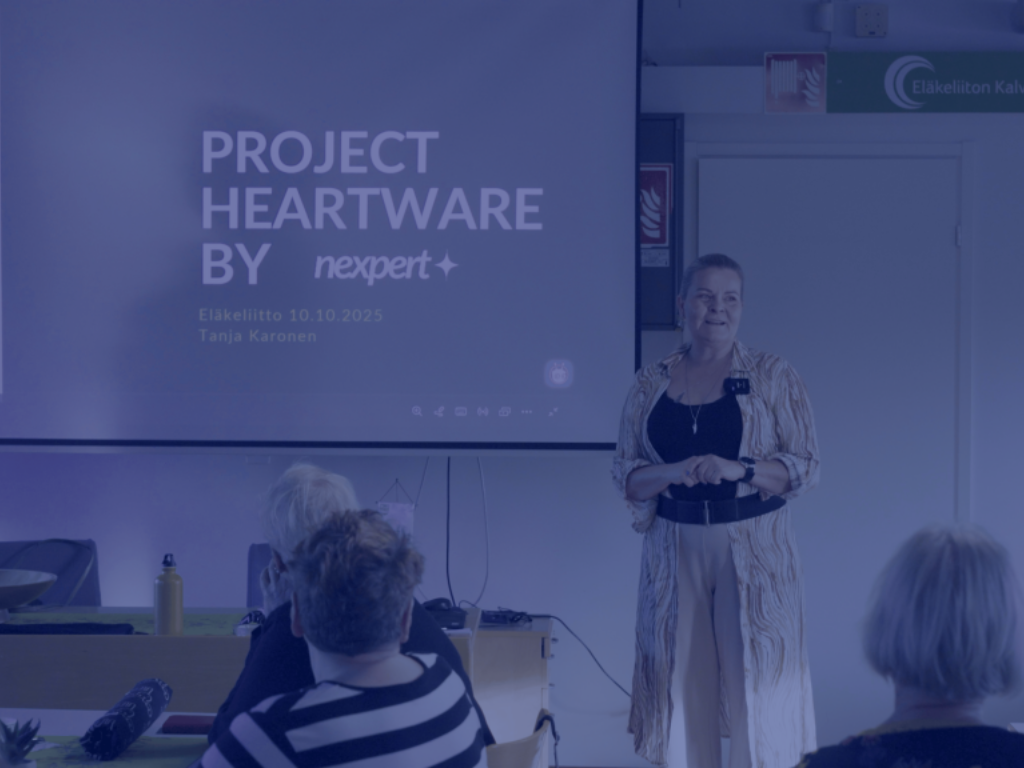
This article is part of blog series by Tanja Karonen. The series explores Project Heartware, a human-centered approach to artificial intelligence in the age of exponential technological change.
Artificial intelligence, automation, and digital services are reshaping everyday life faster than many realize. Accessing public services, managing finances, booking appointments, traveling, or even communicating increasingly requires digital competence. Without support, the risk of exclusion grows.
As I have worked closely with experts and organizations across different fields, it has become increasingly clear how difficult it is to stay up to date with rapidly evolving technologies. Even for professionals whose work includes development and continuous learning, keeping pace would require dedicating an unrealistic amount of time solely to following technological progress.
This raised a deeper concern for me. If highly skilled professionals struggle to keep up, what about people who are not in working life? People who are retired, caring for children at home, recovering from difficult life situations, or otherwise excluded from education and employment?
That concern led me to start the Project Heartware initiative.
Project Heartware is an initiative open to non-profit associations and organizations that work with groups in vulnerable or disadvantaged positions. These may include retirees, people outside working life, individuals in rehabilitation, or other groups who do not have equal opportunities to keep up with rapid technological change.
The core idea is simple: technology should not deepen inequality. Instead, it should be introduced in ways that support people, respect different starting points, and strengthen participation in society. It is a workshop-based process that progresses on the participants’ terms and from their individual starting points.
While the target groups vary, the framework of the operating model remains the same. The model follows a clear structure: workshop, analysis, and hands-on experimentation. This enables consistency and repeatability, while allowing the content to be shaped according to the specific needs of each group.
Project Heartware workshops are organized once a month and are delivered pro bono. The workshops are held in the facilities provided by the selected organization. The aim is to offer concrete, practical support without financial barriers to those organizations and groups who need it most.
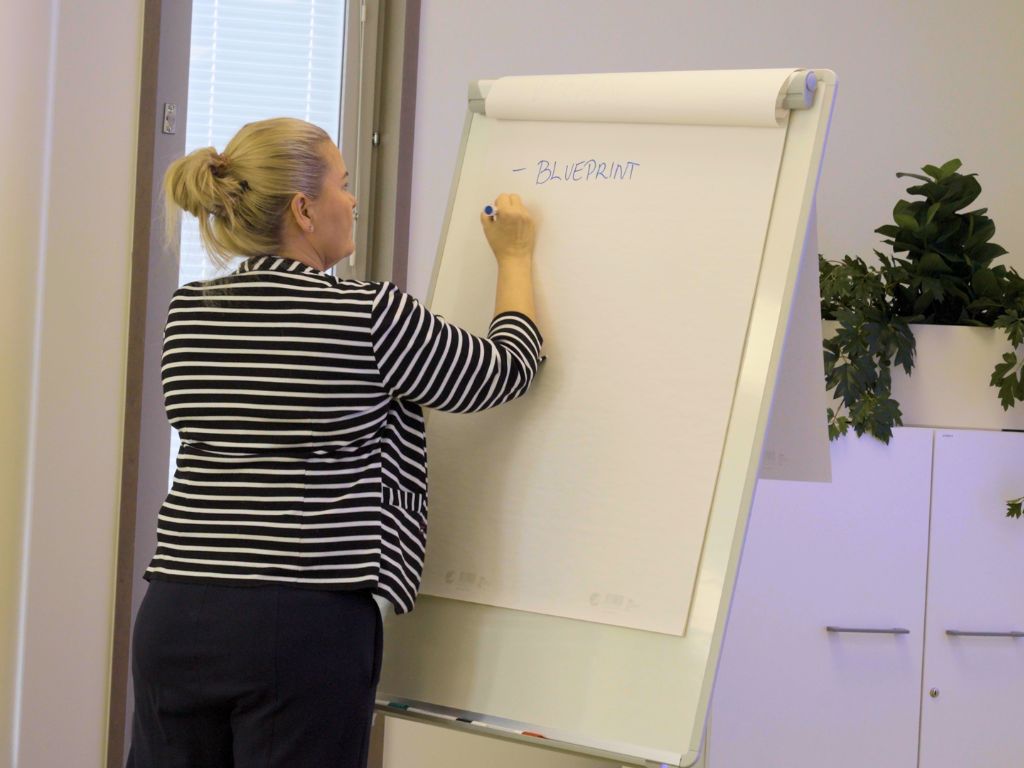
The first workshop focuses entirely on understanding the participants’ situation. No technology is taught and no AI tools are used at this stage.
During the first workshop:
This is done using various facilitation methods — such as discussions, group work, and light participatory exercises — selected according to the group. The goal is not to assess skills, but to gain a realistic and human understanding of the participants’ situation.
The material collected during the first workshop is carefully analyzed. This phase is a core part of Project Heartware.
The analysis is used to:
This ensures that the next workshop is based on real needs rather than assumptions.
Only in the second workshop does the process move into hands-on practice. The exercises are based directly on the analysis of the first workshop.
AI is practiced either on a mobile phone or a laptop:
The goal is not for participants to learn everything, but for them to:
The workshop is supported by YouTube materials, which participants can return to afterward to refresh their learning.
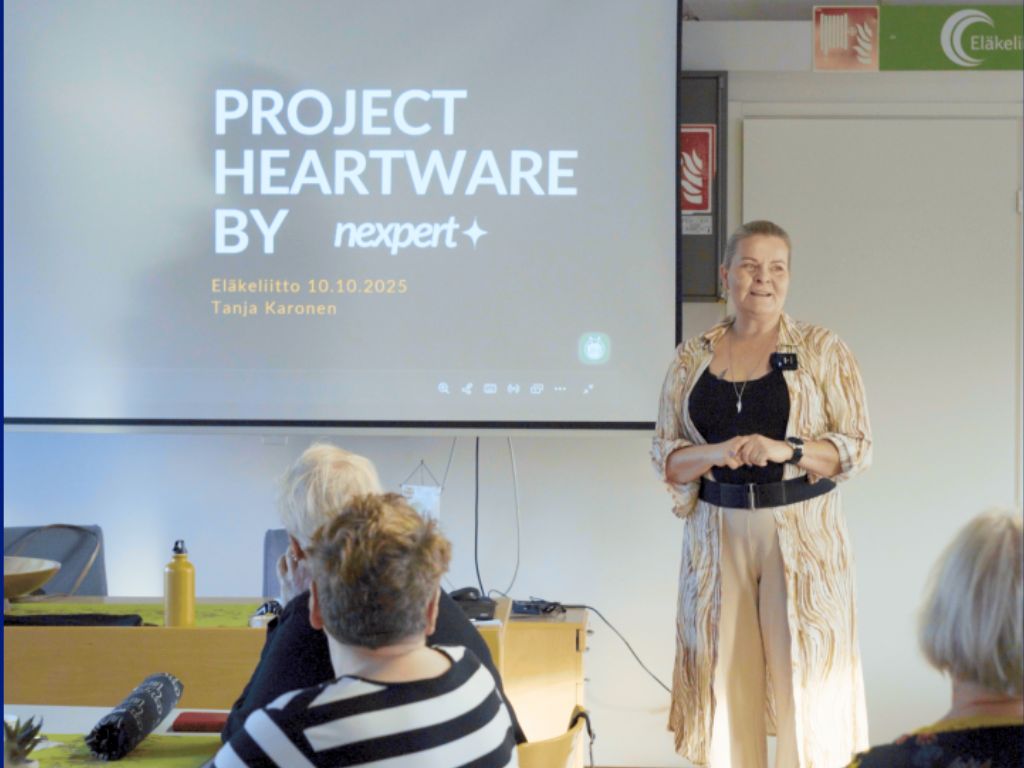
The Project Heartware operating model is based on the idea that learning grows from interest and meaningfulness. When people first recognize how AI can help them in their own everyday lives, motivation emerges. After that, learning becomes significantly easier, even at a broader and more technical level.
People are always at the center. Technology comes second.
By participating in Project Heartware workshops, my intention is to help lower the risk of exclusion among people who are already in a more vulnerable position in an increasingly technologized society. As digital services, automation, and AI-driven systems become embedded in everyday life, the ability to understand and interact with them becomes a prerequisite for participation — not only in working life, but in society more broadly.
In the coming years, we are moving toward what is often described as an agentic state, where artificial intelligence does not merely respond to instructions but acts semi-autonomously on behalf of users. In such a society, understanding how AI works, how it makes decisions, and how to guide and supervise it will become a civic skill, much like basic digital literacy is today.
Project Heartware aims to support this transition at a human pace. By focusing on everyday relevance and practical agency, the workshops help participants build confidence and understanding before technological complexity increases further. The goal is not technical mastery, but maintaining agency — the ability to act, decide, and participate meaningfully as society evolves.
In this way, Project Heartware is not only about learning new tools. It is about ensuring that people are not left behind as the logic of society changes, and that technological progress strengthens inclusion rather than deepening existing divides.
Project Heartware is accompanied by researchers from LUT University. This collaboration produces academically researched knowledge about the impact of the workshops on participants’ learning, confidence with technology, and everyday agency.
The research partnership supports the long-term development of Project Heartware and helps deepen the understanding of impact — not only as lived experience, but also as research-based evidence. This makes it possible to examine the effectiveness of the human-centered AI approach systematically across different target groups.

About Crush Movement
Crush Movement is an online magazine and community that brings together founders, experts, and organizations who want to build meaningful, future-oriented work together. The platform evolves continuously through the contributions and ideas of its members.
About Nexpert
Nexpert is a Finnish consulting company working at the intersection of technology, learning, and human-centered change. Nexpert focuses on practical collaboration, adoption, and building solutions together with people.
About the Author
Tanja Karonen is the founder of Nexpert. Her work is guided by values, collaboration, and the belief that sustainable progress happens when people are actively involved in shaping what they are part of.
About the Creation of This Article
This article was created using an AI-assisted interview and writing process.
![[headshot] image of customer (for a landscaping service)](https://cdn.prod.website-files.com/6874a52f3965fab31cf07b31/69b40e7a8c39a77ecfd4b7f6_Tanja%20Karonen.PNG)
Tanja Karonen is a solopreneur and expert in digital transformation, continuous improvement, and human-centric technology. Her work focuses on simplifying everyday work by using AI, optimizing processes, and removing unnecessary complexity. She helps organizations identify what truly adds value and eliminate waste, making work clearer, smoother, and more meaningful.
A 30-day challenge designed for authentic thought leaders who want to become unignorable on LinkedIn.Build trust, master storytelling, and attract the right audience without relying on AI or clickbait hacks.Includes 28 emails with over 100 customizable post ideas, helping you show up confidently, optimize your profile, and grow your credibility, engagement, and sales.