This article is part of the blog series published in the Crush Movement online magazine by Tanja Karonen. The series explores Project Heartware — a human-centered approach to artificial intelligence in the age of exponential technological change. While the first article introduced the values and operating model behind Project Heartware, this piece moves into practice. It tells the story of the first concrete case and what happened when the model met a real community. Read the introduction to Project Heartware here.
Pension Association South Häme District (Eläkeliitto Etelä-Hämeen piiri) became the first case for Project Heartware for several reasons. Seniors are, in my view, a particularly important and timely target group. The active members of pensioners’ associations — board members, group leaders, and volunteers — already coordinate activities, manage communication, and support their members through digital channels.
In that sense, the group was a natural fit. They are not starting from zero. At the same time, they face challenges that closely resemble those found in working life: limited time, increasing administrative effort, and the constant need to activate and engage members in a context where natural attrition is unavoidable.
There was also a practical reason for choosing this partner. Someone from my own network leads the Etelä-Häme regional organization. It felt natural to ask whether they would be interested in trying something new together. We decided to pilot Project Heartware and see what could be learned.
I did not approach the collaboration with strong assumptions. I had discussed the group briefly with my contact person beforehand and knew that participants’ starting levels would vary. Because this was the very first Project Heartware case, I chose to begin with listening rather than teaching.
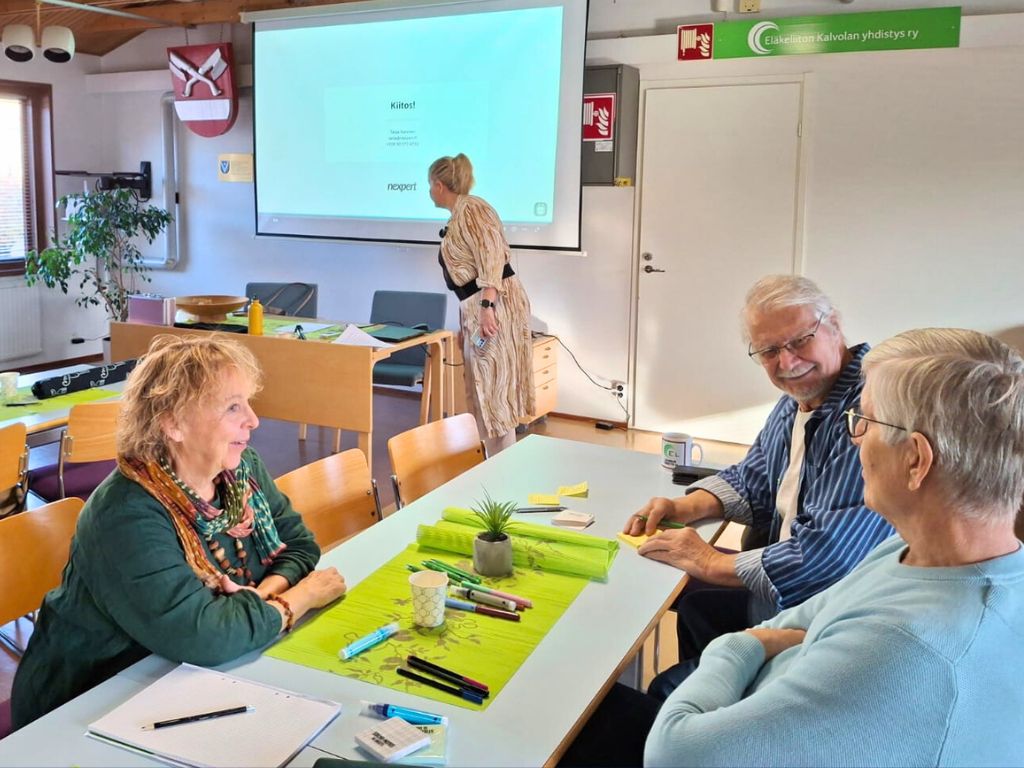
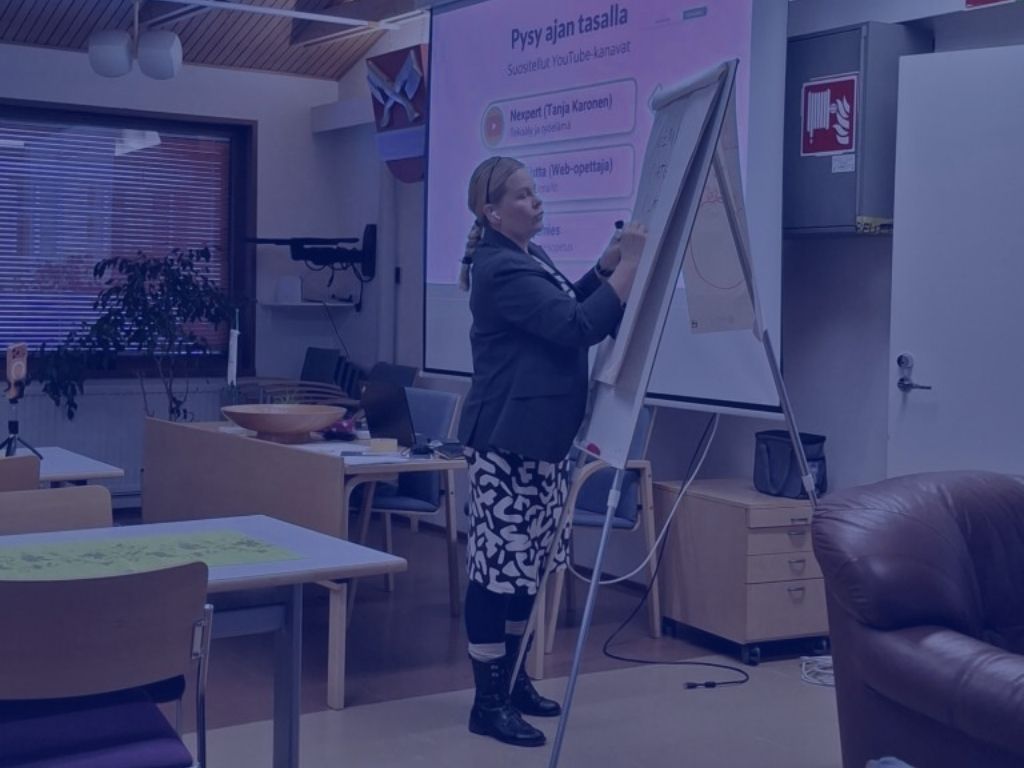
The first session was designed as a two-hour facilitated workshop using Learning Café–style methods. Rather than introducing technology, the focus was on understanding participants’ expectations, current practices, and everyday challenges in association work. Through guided discussions and group work, we mapped their roles, daily tasks, and the realities of running the organization.
I assumed that artificial intelligence would be largely unfamiliar territory for most participants. I also expected a generally open, non-confrontational attitude toward the topic, even if hands-on experience would be limited.
Many of the themes that emerged were not about technology itself. Time pressure, difficulties in finding new active members, and the effort required to keep people engaged were recurring topics. Communication and coordination took up a significant amount of energy. The atmosphere was open and constructive, and the workshop confirmed that technology would only be useful if it addressed these concrete realities.
The first workshop went largely as expected and created a solid foundation for the next phase.
The second workshop was also planned as a two-hour session and focused on hands-on experimentation with AI tools. This was the first time participants actively tried using AI, both on laptops and on mobile phones.
At this stage, a significant challenge became visible. Some participants were curious and eager to experiment but did not want to create accounts or sign in to services. At the same time, technical issues began to consume a large portion of the workshop time. There were problems with internet connectivity, logging into services, downloading applications to mobile devices, and completing the initial setup.
As a result, much of the planned hands-on time was lost to technical troubleshooting. It became difficult to support both beginners and more advanced participants within the same two-hour session.
This was a critical learning moment. Even in a pro bono setting, time is valuable. Technical readiness cannot be assumed, and different levels of experience cannot be effectively addressed in a single short workshop.
These observations led to a clear decision. The next workshop needed a different structure.
The third workshop was organized as a full-day session. Participants were divided into groups based on their starting points and preferences. Those who were skeptical or did not want to sign in to services began by observing and exploring what AI can do without hands-on use. Mobile users and laptop users had separate sessions tailored to their specific contexts.
After lunch, participants who wished to go further were able to work more deeply with laptops and explore concrete use cases connected to Pension Association’s everyday operations.
This format proved to be the most effective. It respected different levels of readiness, reduced frustration, and allowed participants to progress at their own pace. Some who began the day cautiously were able to engage with more advanced topics by the afternoon.

The most meaningful insights were practical rather than abstract.Participants learned how AI could help them draft member newsletters more efficiently, create engaging visuals, and turn long lists of activities into clear infographics that communicate an entire season’s program at a glance. This matters because people absorb information differently. Some prefer text, other visuals, and AI made it possible to support both.
There were also insights at a more strategic level. Participants explored how activity plans and budgets could be compared with actual outcomes, making follow-up and reporting easier. They discussed how AI agents could help identify inconsistencies across multiple websites — a recurring challenge when information is updated in one place but forgotten in another.
The feedback was strongly positive. These were tools that saved time, reduced errors, and supported better communication, exactly in the areas identified as challenging in the first workshop.
One of the key lessons from this case is how outdated many assumptions about seniors and technology have become. Many active retirees already possess strong digital skills and are capable of adopting new tools quickly when those tools are meaningful.
As the population continues to age, this group will only grow. Importantly, these active members also play a crucial role in supporting those who are more isolated, less confident, or at risk of exclusion. Community is at the core of association’s work, and technology, when introduced thoughtfully, can strengthen that community rather than weaken it.
Project Heartware, in this context, becomes a form of leverage. It supports those who are already active and enables them to reach others more effectively.
We are moving toward what is often described as an agentic state, where AI systems increasingly operate autonomously within digital services. AI agents will interact with each other, while humans provide inputs, guidance, and oversight.
In such a society, understanding how AI works, how it makes decisions, and what requires attention becomes a civic skill. That understanding does not emerge overnight. It grows through small steps, experimentation, and curiosity.
Project Heartware aims to support this transition at a human pace. By lowering the threshold to engage with AI, the workshops strengthen participants’ sense of agency. Those who take part can then act as messengers within their own communities, helping to spread understanding and confidence further.
In the coming years, this kind of peer-to-peer impact will be essential.
Project Heartware is accompanied by research collaboration with LUT University, focusing on evaluating the project’s impact from an academic perspective. The aim is not to co-develop the initiative, but to study its effects on participants’ learning, confidence with technology, and everyday agency.
Over time, this collaboration will produce research-based insights into how human-centered AI workshops influence different target groups. This academically grounded perspective supports a deeper understanding of Project Heartware’s societal impact and provides evidence-based knowledge for future development.
Crush Movement is an online magazine and community that brings together founders, experts, and organizations who want to build meaningful, future-oriented work together. The platform evolves continuously through the contributions and ideas of its members.
Nexpert is a Finnish consulting company working at the intersection of technology, learning, and human-centered change. Nexpert focuses on practical collaboration, adoption, and building solutions together with people.
Tanja Karonen is the founder of Nexpert. Her work is guided by values, collaboration, and the belief that sustainable progress happens when people are actively involved in shaping what they are part of.
This article was created using artificial intelligence and an AI-assisted interview and writing process.
![[headshot] image of customer (for a landscaping service)](https://cdn.prod.website-files.com/6874a52f3965fab31cf07b31/69b40e7a8c39a77ecfd4b7f6_Tanja%20Karonen.PNG)
Tanja Karonen is a solopreneur and expert in digital transformation, continuous improvement, and human-centric technology. Her work focuses on simplifying everyday work by using AI, optimizing processes, and removing unnecessary complexity. She helps organizations identify what truly adds value and eliminate waste, making work clearer, smoother, and more meaningful.
A 30-day challenge designed for authentic thought leaders who want to become unignorable on LinkedIn.Build trust, master storytelling, and attract the right audience without relying on AI or clickbait hacks.Includes 28 emails with over 100 customizable post ideas, helping you show up confidently, optimize your profile, and grow your credibility, engagement, and sales.